 ™
Traditional assessments
Measure once, hand over a report, and stop.
contactus@reflexant.ai
Built by people leaders in India & the US
One profile of how you work, and Rubi, a companion for the moments that make work hard.
Try Rubi
Pick a moment, or type your own. This is a scripted demo of how Rubi responds.
Hi Aditi, I've read your four instruments as one profile. What's coming up this week that you'd like to think through?
Try a moment
Aditi's profile
 Naturally direct
 Energised by connection
 Leads with evidence
 Strength: developing others
Scripted demo · persona and replies are illustrative
The problem
Most assessments stop at the report. Work doesn't. ReflXnt carries self-understanding into the moments where it matters.
20%
of employees worldwide are engaged at work
70%
of the variance in team engagement comes from the manager
22%
manager engagement, down from 27% a year earlier
Source: Gallup, State of the Global Workplace (2026)
Why ReflXnt
No type labels, no workshop that fades by Friday. We stay with people through the work itself.
Measure once, hand over a report, and stop.
Understand, practise in real moments, and see what changed.
The idea at the centre
Every role asks you to work a little differently from how you naturally would. ReflXnt makes that stretch visible, so it can be chosen and supported, not quietly carried.
The distance between how you naturally work and how your role asks you to work.
StyleProfile rates every item twice, once for each. Small gaps are normal. Wide ones, carried every day, are what wear people down.
How we measure itHow it works
Four short instruments come together as one profile, the starting point for everything Rubi does.
Meet Rubi
Rubi knows your profile, so the same question gets a different answer for different people. Your conversations stay yours.
Meet RubiThe rhythm
A short set of instruments builds one honest picture of how you work.
Rubi helps you through real moments, week after week.
We check in again, so growth is shown, not assumed.
For organisations
Coaching reaches everyone, not just the top few, at a per-seat price the employer pays.
Their conversations with Rubi, their answers and their reflections. Shared only if they choose.
Team-level patterns that show where support is needed. Never individuals.
Development only, by contract. Never used for hiring, promotion or performance reviews. Privacy & security


Built on method, not prompts
“People don't want to be measured. They want to become.”
Dr. Ranjit Nair, Founder & CEO
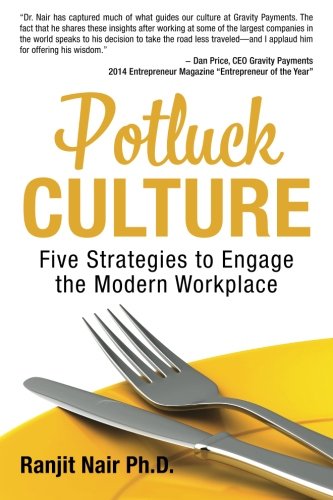
Rubi's guidance comes from 25 years of leading people at Fortune 500 scale, and from Dr. Nair's books Potluck Culture and Growing the Human.
Why we built ReflXntA test gives you a label and stops. ReflXnt keeps going, Rubi helps you use what you learn in real moments, and we check whether anything actually changed.
No. Your conversations are private. Your organisation only sees team-level patterns, never individuals.
Weeks, not months. A first team is usually up and running in two to three weeks.
The employer, per seat per year. Never the individual.
Book a demo
A 30-minute conversation. We'll show you the platform, a live integrated profile, and what a focused first deployment could look like.
ReflXnt helps people understand how they work, handle real situations, work better with others, and reviews progress periodically to prove it.
StyleProfileDriveMatrixClarityLensCORE27 One profile
Development starts with an honest read. Four proprietary instruments each answer one question about a person.
Natural and Adapted style on two axes, and the Adaptation Gap between them.
24 items, rated twice · ~15 min DriveMatrixEight drivers ranked from primary to suppressed, and the one your role is starving.
48 items · ~20 min ClarityLensSeven cognitive lenses: the ones you lead with, and the ones that narrow under pressure.
42 items · ~15 min CORE2727 learnable competencies, measured against a standard, not against other people.
162 items · condensed version availableThe full battery takes about an hour and can be taken in parts. The Natural-versus-Adapted distinction has a long history in behavioural science, we didn't invent it. What happens next is the difference.
Most assessments stop with separate results. ReflXnt reads the four together and names each person's growth edge: the one or two moves that change everything else, not 27 things to fix.
A single instrument gives you one true fact about a person and no way to know why it matters. Four, read together, show how someone works, what it costs them, what fuels them and how they think. That synthesis is what a stack of separate tools can't produce, however good each one is.
This is where other assessments end and ReflXnt begins. Rubi carries the full profile into the real moments of work.
Development measured once is a promise. Every instrument is re-administered on a cadence agreed with your organisation, and each profile is reported as a comparison, then versus now.
Nothing is re-measured without the individual's consent. Comparisons stay private to the person; the organisation sees movement only in aggregate. If a gap hasn't moved, what changes is the coaching approach, not the target.
StyleProfile maps your Natural and Adapted behavioural style on a two-axis circumplex, and measures the Adaptation Gap between them.
StyleProfile reads behaviour along Pace and Focus, across four styles: Pacesetter, Connector, Anchor and Refiner. Every item is rated twice, once for how you naturally operate, once for how you operate at work.
No good styles, no bad styles, just an accurate map of where you sit, and where your role has moved you. Each of the twelve cross-style patterns has its own strain signature and its own coaching path.
“The goal is not zero gap. It is a stretch made conscious and chosen.”
Dr. Ranjit Nair
The distinction between natural and adapted style is well established in behavioural science; we make no claim to have discovered it. What ReflXnt adds is coaching the gap continuously through Rubi and reviewing it periodically.
The distance between your style and a colleague's is measurable too. Style Distance powers Rubi's person-specific coaching, turning “why are they like that?” into a practical way to collaborate, persuade and resolve conflict with a specific person.
See how Rubi coaches the gapDriveMatrix reveals what gives you energy at work, and where your role may not be giving an important driver enough room.
Connection, Growth & Learning, Purpose, Autonomy, Achievement, Influence, Mastery and Recognition, ranked from primary to suppressed. Not the story you'd tell in an interview: the fuel you actually run on.
Connection is primary, and this role feeds it least. That is the early-warning signal.
The most important finding is often the starved driver, a primary motivation your role never feeds. Rubi helps you notice the pattern and explore what may need to change.
It also makes you better at motivating others: a Recognition-driven colleague and an Autonomy-driven one need different things from you, and guessing wrong costs you both.
See Rubi's coaching areasClarityLens shows which perspectives dominate your thinking, and which narrow under pressure.
Evidence, People, Systems, Contextual, Possibility, Pragmatic and Principled. Most people lead with one or two, until pressure narrows the view further.
Principled is used least, a perspective that may help in some situations. A less-used lens isn't a weakness.
Lenses are not fixed traits. They widen with practice. That is the developmental promise.
Before a high-stakes call, Rubi walks you through your least-used lens, the Systems view you skip, the Evidence check you rush.
And because colleagues have lenses too, ClarityLens makes you persuasive in their terms: feasibility for a Pragmatic thinker, data for an Evidence thinker, meaning for a People thinker.
“That's not manipulation. That's respect.”
Dr. Ranjit Nair
CORE27 maps 27 learnable leadership capabilities, your signature strengths, and the areas where focused growth could matter most.
Self-Mastery, Clear Thinking, Relational Intelligence and Authentic Presence. Each competency is scored against a standard, not against other people: a mirror, not a leaderboard.
Signature strength: Developing Others. Growth edge: Difficult Conversations.
Low scores aren't verdicts. In ReflXnt's language they are dormant or emerging, your richest ground to grow.
Nobody develops 27 things at once. CORE27 names the one or two competencies where growth changes everything else, and puts your strengths to work.
A 94 in Developing Others isn't just a compliment; in Rubi's hands it becomes the lever for delegation that lowers your load. Rubi attaches each development zone to live moments, the feedback conversation, the delegation you keep deferring, and the scores are taken again on a regular cadence.
Generic AI knows your prompt. Rubi knows your pattern, present when you need a second thought, quiet when you don't.
Sunny keeps stalling my budget proposal.
Sunny leads with the Evidence lens, enthusiasm without data reads as hand-waving to him. Send the numbers the day before, lead with feasibility, and give him room to analyse before you ask for the yes.
Rubi answers from your profile, not a generic script. Same question, different person, different advice.
Rubi coaches from your measured profile, StyleProfile, ClarityLens, DriveMatrix and CORE27, understood as one person.
Its method isn't improvised. It's grounded in Dr. Ranjit Nair's body of work, Potluck Culture and Growing the Human, established coaching principles, and 25 years of leading people at Fortune 500 scale. A real point of view on leadership, not a neutral mirror.
Your coaching conversations are yours, like a coach's notebook. Your organisation sees only aggregate insight, never sessions, transcripts or raw answers.
That boundary is contractual and enforced in the system. People only develop honestly when they trust the room.
Progress is reviewed periodically, your Adaptation Gap and competency movement, not how often you chatted. Either the coaching worked, or it adjusts.
Disagree with Rubi? Push back, try it your way, the next review is a more honest referee than either of you.
Eight people across Austin, San Francisco, Hyderabad, Kochi, Surat and Vishakhapatnam, led by Dr. Ranjit Nair. Each of us took our own instruments first.
StyleProfile reads everyone on the same two axes your team would be read on: pace and focus. This is where it put us. Pick a style to see who sits there, or open anyone's profile.
Dr. Ranjit NairFounder & CEO
 Jiji NairFinance
 Esha SantoshProduct
 Dev NairMarketing & Operations
 Arul JPCommercial
 Nikhil NairGlobal Outreach
 Tiru VardhanTechnology & Architecture
 Lyza LucasU.S. Client & Media
PacesetterAnchorRefinerRefinerPacesetterConnectorRefinerConnector
25 years leading people in complex global organisations, two books, one question.
Dr. Nair is an Indian American, raised in Hong Kong, who came of age in the United States, a lifelong education in how differently people work, and how much is lost when they can't read each other.
Companies invest in systems, finance, markets, now AI. The human being who navigates the meeting, carries the team and makes the call gets a training day and a report. None of it appears on a dashboard. All of it decides whether a company wins.
Dr. Nair holds a Ph.D. in Organization & Management, studied Strategic HRM at Harvard, and is Professor of Practice at the University of Texas at San Antonio. Potluck Culture won a North American Book Award: culture is built through dialogue, meaning and fit, not mandate. Growing the Human argues the inner work comes first: you cannot lead from a self you haven't met.
Those books aren't marketing for ReflXnt. They're its operating system, the method Rubi works from.
ReflXnt is built by RefleXant Solutions India Pvt. Ltd., operating across India and the United States, launching first in India, where the need for scalable coaching is sharpest, with the US as its parallel market.
Career credentials. These organisations are not ReflXnt customers.
“I built ReflXnt so that becoming finally has a home.”
The same principles we coach. We hold ourselves to them first.
We help people see themselves clearly and act on what they see, in the workplace moments that matter.
A world where every person knows who they are at work, and chooses how to grow.
Understand before solving; admit what we don't know, then go find out.
Full responsibility for our work, decisions and development.
Share what we know and coach without being asked.
Better thinking, better solutions, comfort doesn't set the standard.
Outcomes over activity. We measure what we changed.
Honest with clients, each other and ourselves, including about what isn't working.
Every principle we coach, we hold ourselves to first.
Essays and field notes from Dr. Nair and the ReflXnt team, practical thinking on adaptation, energy, leadership, and working with people who are different from you.
The construct explained: Natural style, Adapted style, and why the distance between them is the most useful number in HR.
Read the essayStrained adaptation, and the patterns engagement surveys can be slow to show.
A short guide for HR and L&D leaders: what the Adaptation Gap is, how to recognise strain, and the questions to ask in your next one-on-one.
It's on its way.
Check your inbox for the Field Guide. If it doesn't arrive, write to contactus@reflexant.ai.
For the curious individual, the careful buyer and the healthy sceptic. Still unsure? Ask us directly.
Traditional assessments measure and stop, a type, a report, and a workshop that fades by Friday. ReflXnt starts where they end: four proprietary instruments build one integrated profile, Rubi coaches you through real situations against it, and progress is reviewed on a regular cadence to confirm behaviour actually changed. A label tells you what you are; ReflXnt works on why, and what to do next. (StyleProfile is our own instrument, developed independently and unaffiliated with any other assessment product or publisher.)
Yes, and we say so plainly. The distinction has a long history in behavioural science, and other tools report it. What we do differently is treat the gap as the work: coach it continuously through a companion that knows your whole profile, and review it periodically to see whether it resolved. The measurement isn't the moat. The loop is.
The real product begins. Each person gets one integrated profile, not four reports, with their Adaptation Gap and growth edge named. Rubi starts coaching within their real work: the negotiation, the stalled proposal, the one-on-one going sideways. HR sees aggregate signals, and progress is reviewed on a regular cadence. The assessment is the intake, not the deliverable.
No. A chatbot answers anyone's question with generic advice. Rubi coaches from your measured profile, style, competencies, drivers and lenses understood as one person, grounded in Dr. Nair's body of work, and revisited as you grow. Push back on it, ignore it, try your own way: the next review is an honest referee.
No. Your sessions with Rubi are private, like a coach's notebook, that boundary is contractual, not cosmetic. Your organisation sees only aggregate analytics, never session content, transcripts or raw answers. You may choose to share selected development insights with a manager, coach or team.
The platform is built for it. Processing is consent-based with clear purpose limitation; individuals can access and correct their data; organisational reporting is aggregate-only; and RefleXant Solutions India Pvt. Ltd. supports India data residency. We scope the specifics with your security and legal teams during onboarding, bring your hardest questions.
Weeks, not months. Standard onboarding is lightweight: seat setup, a launch session for participants, and the assessment window (the full battery takes about an hour and can be split). A focused first deployment for a 100 to 150 person cohort typically stands up in two to three weeks.
Not by activity. Usage tells you a platform is being opened, not that anyone grew. Two numbers matter: Adaptation Gaps resolved, stretches made conscious, chosen and sustainable, and observed behaviour change across each review cycle. If usage is high and behaviour didn't change, we haven't succeeded, and the product is built so that difference is visible.
The employer, always. Per seat, per year, never the learner, never per usage, so nobody is metered out of their own development. Pricing depends on cohort size and deployment; we'll quote against your headcount on the demo call.
StyleProfile is built on the well-established two-axis circumplex model of interpersonal behaviour, and all four instruments are in an active validation and norming programme, reliability testing (Cronbach's alpha), retest correlation, and growing India-population norms. Until norms are finalised we report directionally rather than overclaim. If validation evidence matters to your buying process, it should, ask us for the current data on the demo call.
It ends the rationing. Human coaching works and remains available through certified coaches, but it has only ever reached the top few percent. Rubi brings profile-grounded coaching to everyone else, every day, and handles the moments a monthly session can't reach.
Yes. RefleXant Solutions India Pvt. Ltd. supports India data residency and GST invoicing alongside US contracting. India-first, US-parallel is our own operating model, your cross-border deployment is our home ground.
The construct explained: Natural style, Adapted style, and why the distance between them is the most useful number in HR.
Every role asks a person to work differently than they naturally would. A methodical engineer is handed a team and told to be decisive by Thursday. A natural connector inherits a compliance function and learns to lead with the checklist. Neither is being mistreated. Both are adapting.
StyleProfile measures both patterns. Natural style is how someone works when the pressure is off and nobody is watching. Adapted style is how they work in the role they hold right now. The distance between the two is the Adaptation Gap.
This is the part most people get wrong on first hearing. A wide gap is not a diagnosis and a narrow gap is not a virtue. Adaptation is how people grow into roles they have not held before. Someone with a wide, well-supported gap may be having the best year of their career.
What matters is whether the adaptation is chosen, and whether it is sustainable. Those are two different questions, and neither one shows up in a score.
Adaptation carries an energy cost. Holding a posture that is not your default takes attention that would otherwise go to the work. For a quarter, that is a stretch assignment. Held for two years without acknowledgement, it may contribute to fatigue, reduced energy, or disengagement.
The uncomfortable detail is that strained adaptation rarely announces itself. The person carrying it is usually performing. They are often the one you would name if asked who is doing well. They are meeting the standard by spending more to meet it, and the spending is invisible on every dashboard you have.
Nobody resigns because their Adapted style differed from their Natural style. They resign because the difference went unnamed for two years.
The goal is not to eliminate adaptation. Roles are not built around behavioural preferences, and they should not be. The goal is to make the gap visible, chosen, and supported. In practice that means three things.
Measurement tells you the gap exists. It does not tell anyone what to do on Monday morning, in the meeting where the pressure actually lands. That is the work Rubi does: carrying the profile into the specific conversation, the specific decision, the specific week.
A gap measured once is a fact. A gap measured, worked on, and measured again is a practice.
Strained adaptation, and the patterns engagement surveys can be slow to show.
Engagement surveys are good at finding people who have already decided to leave. They are poor at finding the people who are still trying.
The pattern looks like this. Someone whose behavioural style has shifted a long way from their natural one. Strong competence, so the output holds. A driver the current role does not feed. On a survey they score in the middle, because the middle is what you get when somebody is honest about being tired and loyal at the same time.
Mid-range scores get read as neutral. They become the population nobody acts on, because the detractors are louder and the promoters are better company. But a mid-range score from a high performer under strained adaptation is not neutral. It is a person spending down a reserve.
The signal is never the score on its own. It is the combination: a wide adaptation gap, an unmet driver, and a competence profile strong enough to hide both.
A survey asks how you feel about the company. It never asks what it costs you to work here the way you currently work here.
Managers usually notice something, and they usually mislabel it. The person seems less forthcoming in meetings. They have stopped volunteering. Replies take longer. Read as attitude, this becomes a performance conversation. Read as strain, it becomes a different conversation entirely, and a much shorter one.
Managers account for roughly 70% of the variance in team engagement, which means the same information produces a good outcome or a bad one depending on the frame the manager brings to it. Giving them the frame costs less than replacing the person.
This does not need a new initiative. It needs the manager to know which of their people are carrying a wide gap, and to ask about the cost rather than the output.
None of that retains anyone by itself. It does tell you, twelve months before the resignation, which conversations you still have time to have.
We'll walk you through the platform, show you a live integrated profile, and explore what a focused ReflXnt deployment could look like for your organisation.
30 minutes with our team. Your context first, product second.
A live walkthrough: the instruments, one integrated profile, and Rubi coaching a real scenario.
A focused first deployment for one cohort, baseline, coaching, re-measure. You decide on evidence, not a pitch.
Expect one email from our team within a working day to find a time. In the meantime, the Adaptation Gap essay is a good primer.
ReflXnt is operated by RefleXant Solutions India Pvt. Ltd. This page summarises how we handle personal data, how the platform is secured, and the terms on which it is used.
ReflXnt processes personal data on the instruction of the employing organisation that provides your seat, and always on the basis of your consent. Processing is limited to a single declared purpose: your development. We do not sell personal data, and we do not use it to train models for anyone else.
Questions or requests: contactus@reflexant.ai.
Access to individual data is structurally restricted rather than merely discouraged. Organisational reporting is generated from aggregates, so there is no view in the product through which a manager, an administrator or an account team can read one person's sessions.
Security reviews, questionnaires and DPIA support are part of onboarding, bring your hardest questions.
ReflXnt is licensed to organisations under the commercial terms agreed for each deployment. The employer pays; the individual never does, and usage is never metered against the learner.
The full contractual terms are provided with the customer agreement; this page is a plain-language summary and does not replace it.
The link may be old, or mistyped. Everything that was here is still somewhere on the site.
